Finding Family
A personal journal exploring genealogy, history, and the stories that emerge from historical records.
8:14 am on a Tuesday
The following post will be a bit off the main subject. I have more to come soon, but for now I want to take a moment to remember a day from 25 years ago that I will never, ever forget.
American Airlines Flight 11 is being hijacked while passing over central Massachusetts. Somewhere in the stretches of hills and rivers below, I am 12 years old in 6th grade at John Fitzgerald Kennedy Middle School in Hudson, Massachusetts. My home-room teacher is one of the most influential teachers I will ever have, Mr. Hoessel, and for him it is also just another school day.
There are no smart phones to clue us in when, at 8:46 a.m., the hijacked Flight 11 soars over the streets of Manhattan directly into the North Tower of the World Trade Center. There are no news app notifications letting us all know that a second plane had hit the South Tower, or a third plane crashing into the Pentagon. There was one announcement over the intercom that a plane had hit a building in New York City, but for most of the 6th and 7th graders at JFK Middle School learning that 3,000 people died that day would occur all at once when we got home.
The roughly half mile walk from school to my home on Eaton Drive contains the last moments of ignorance from the wider world that I will ever experience.
It is bliss.
Twenty-five years later, I still don't know whether keeping us ignorant that day was the right decision. Perhaps there was no right decision. But I remember walking home as a child in one world and opening the door into another.
There is a tiny black thread, spun from oil, blood, and greed, that runs from events before I was born, through that day, and into events that were then yet to come. Nearly 3,000 lives ended on September 11. In the years that followed, hundreds of thousands more civilians would die in the wars waged in its name, while millions of others would live with their consequences. Twenty-five years later, it is difficult for me to remember that terrible morning without also remembering everything that came after it.
“Now the eagle soars the sky
Over refugee and child
And to all there is no end
Another day in perfect hell”
-Flogging Molly, Screaming at the Wailing Wall
Finding Hiram
When I was young, my father took us to a highland games event. I remember being awed by the caber toss and the sounds of the piping and drumming events, but where this story begins, for me, is in a small canopy tent, among the many similar tents hosting volunteers from Scottish-American heritage organizations in one corner of the large sunny field. There, in the Clan Munro Association USA tent, I first learned that my surname was Scottish. Pictures of Foulis Castle were displayed beside a photo of the clan chief in full Highland dress. The Clan Munro tartan covered tables and displays, and the clan crest with its perched eagle and the motto “Dread God” appeared almost everywhere. The volunteers there painted what I now recognize as a heavily romanticized, somewhat Victorian version of Scottish Highland identity.
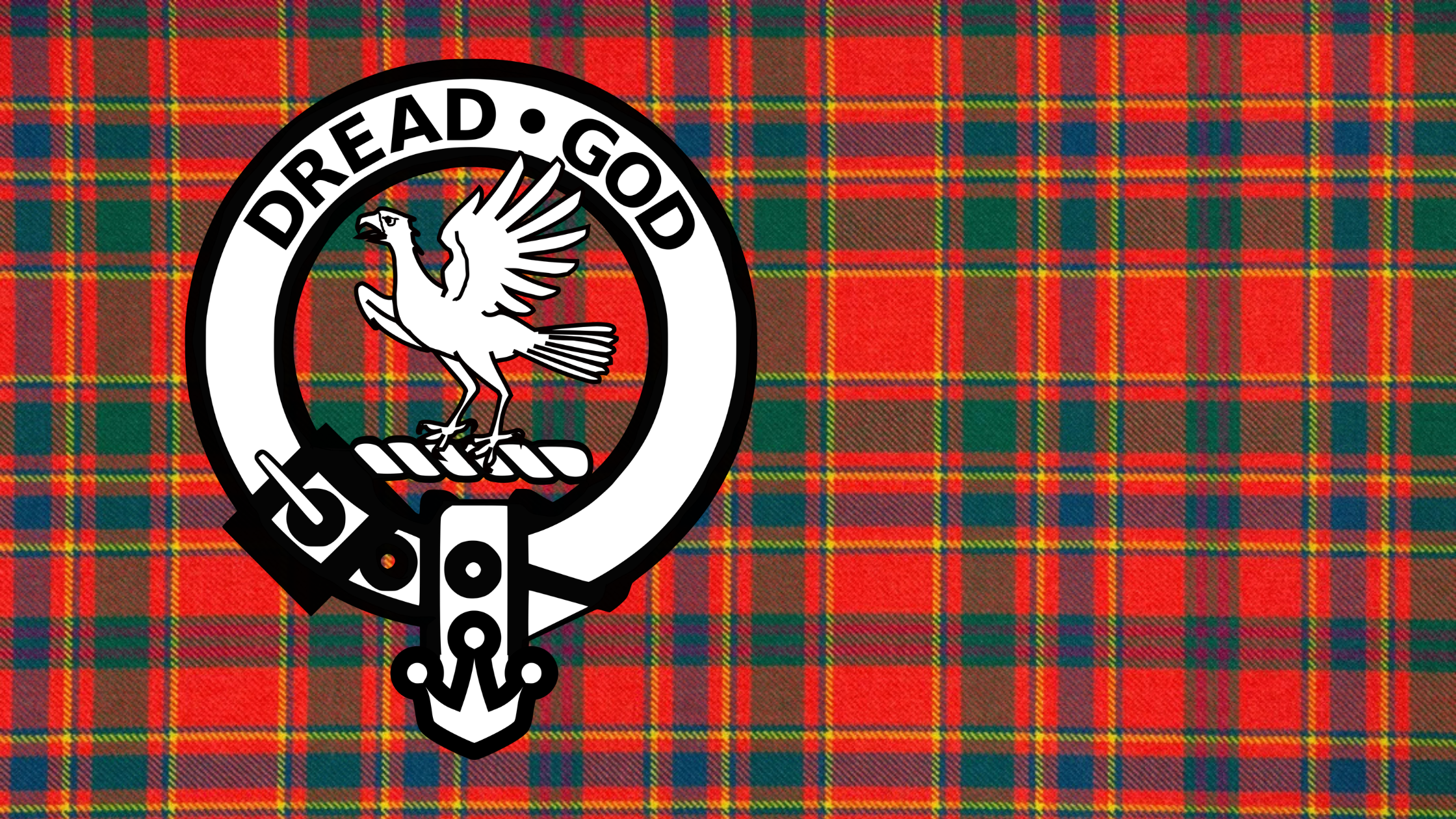
“An Ceann Cirean Cinnidh”
Gàidhlig (Scottish Gaelic): “the crest of the leader of the kin.”
Traditionally a coat of arms is assigned to and only displayed by the individual granted arms. The clan crest however may be displayed by anyone to show allegiance to the clan chief. The English word clan comes from the Gaelic “clann” which means children or descendants.
When websites like Ancestry and FamilyTree made genealogical records readily accessible online, I became curious about how my family was connected to Scotland. Although answering that question with any certainty requires more than a monthly subscription, I have never been able to let it go. My search for that answer would take me on a different journey entirely.
What's in a name?
My father is Ira Hudson Munroe III, but I almost never hear anyone call him Ira. He is and will always be “Skip”. My grandfather was Ira Hudson Munroe II, but he was always “Grampa Bunny” to me. Bunny’s father was the first Ira Hudson Munroe. The family story is that Ira’s father Hiram and his mother Ida chose the name Ira as a combination of both their names.
When Ira (the first) was born in 1900, Massachusetts was booming with industry, especially textiles and shoes. Some evidence of these industries survives today in the former mill towns of central Massachusetts, where large brick mills and factory buildings sit along rivers that once powered them. The jobs in the mills and factories, as well as the various businesses that formed to support a growing population, meant that immigrants poured in from across the world, including many from Canada, who came seeking the opportunities of these growing mill towns. These economic opportunities may help explain why Hiram left Nova Scotia for Massachusetts around 1893 at the age of sixteen. Ida’s parents had also immigrated from Nova Scotia, likely in the 1870s or 1880s.
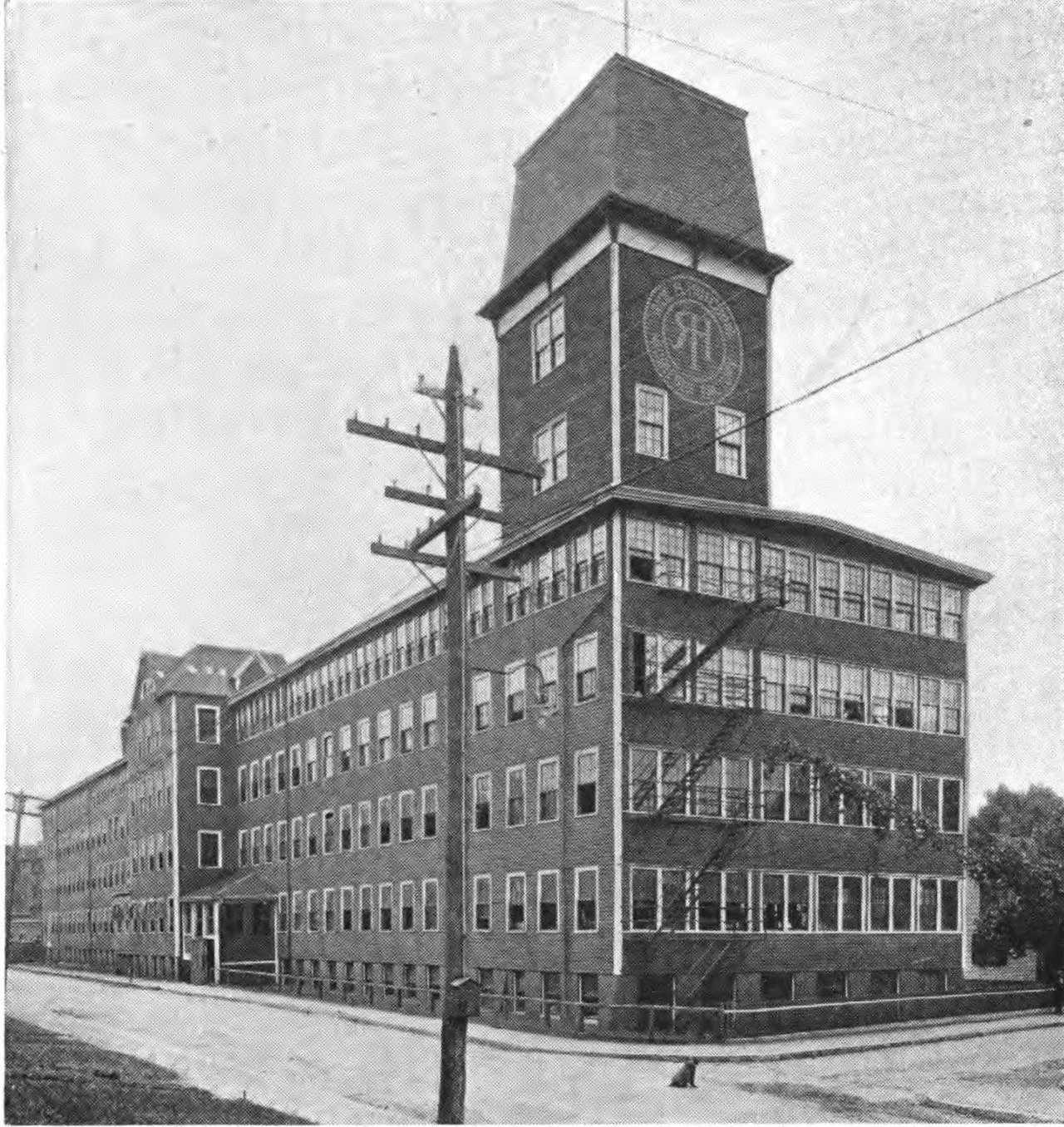
Rice & Hutchins shoe factory; Marlborough, Massachusetts circa 1902
Hiram and Ida’s parents about a decade earlier, were among the many thousands of Canadians that migrated south across the border to the industries of New England during the late 19th century. Although the United States had already begun imposing exclusionary and often explicitly racist immigration restrictions on certain groups, particularly immigrants from Asia, Canadians at that time generally crossed the border with little difficulty.
Hiram and Ida
Genealogical records often provide frustratingly little information about a person’s life. Birth and death dates, marriages, occupations, and census entries can tell us where someone lived and, occasionally, what they did for work. Yet even these small fragments can reveal more than one might expect. In Hiram and Ida’s case, the surviving records create the outline of a story marked by great change.
Hiram David Munroe was born in Hopewell, Nova Scotia on April 22, 1877. His father and mother, Hector and Elizabeth Munroe were in their early 40s. They would have 11 children, most of whom would survive into adulthood, though many would indeed pass prematurely. The family farm where they lived could not be inherited by or support all of the families of these children once they grew up. As a 5th born son, Hiram likely stood to inherit very little, and farming in rural Nova Scotia must have been much less appealing than the opportunities of a more modern life in a city in the early 1890s when Hiram was coming into adulthood. The last evidence of Hiram David Munroe in Canada, using these basic records, is the 1891 Canadian census (note: the transcription is incorrect regarding the surname, it is Munroe not Munson, you can compare the other names in the entry to the 1881 census where the transcription is correct) where he appears still living at home in Hopewell, Pictou county, Nova Scotia - as one might expect at the young age of 14.
Hiram Munroe married Ida May Hudson in Marlborough, Massachusetts on October 1, 1898. This marriage was the first record I found of him in the United States. He was 21 years old and she was 18. As I had noted earlier, he had moved south to Massachusetts from Nova Scotia in 1893, when he would have been about 16 years old.
This fact showed up in the 1900 US census, where Hiram D. Munroe (listed as Harry Munroe) first appears as a Day Laborer at 23 living with his wife Ida, now 20. The census taker has noted his year of immigration and his place of origin as Nova Scotia, and my young great-grandfather is less than one year old. If we look at the 1910 US census Hiram, 33, is now working as a Teamster at a “Box Mill” in Marlborough. Ira Hudson Munroe is now 10 years old, with 3 younger brothers: Herbert, Charles, and Theron. Ida, a young mother of 4, has plenty to do managing a growing household, but the census gives us little other insight.
The 1920 census sadly does not include Hiram, who would have been 43 by then. Hiram David Munroe died on March 18, 1912 when he was only 34 years old. According to the death record, he died of tuberculous osteomyelitis: a TB infection in the bone marrow. Ida was left a young widow at only 32, with 5 young children, having welcomed their youngest son Harry in early 1911. Whatever Hiram may have known about his family’s story, or any connection to Scotland, it is unlikely he was able to convey much that his, by then 11 year old son & my great grandfather, would be able to pass down in great detail.
The Hopewell Munroes
After learning about Hiram Munroe’s untimely death, I was curious about what I could learn about his short life beyond what appears in his few census appearances in both countries. Beyond public records, sometimes it is impossible to find information about a person's life, so I set my expectations pretty low as I began this next stage of my search.
We all are products of our environment in one way or another, so the natural step is to try to learn about his family life. In the census records of Canada from the late 1800s you don't get a specific address for their location, but you can discern the general area from the census region. In this case we know the family farm Hiram grew up on was located somewhere near Hopewell, Pictou County, Nova Scotia. I decided to see if Pictou had a historical society or something along those lines who could help me discover the location of the Munroe home. I was elated when my search revealed the McCullough House Museum & Genealogy Center in Pictou had a service where you can request their assistance with genealogy research in that region.
About 50$ and a few weeks patience delivered a land grant map and several documents.
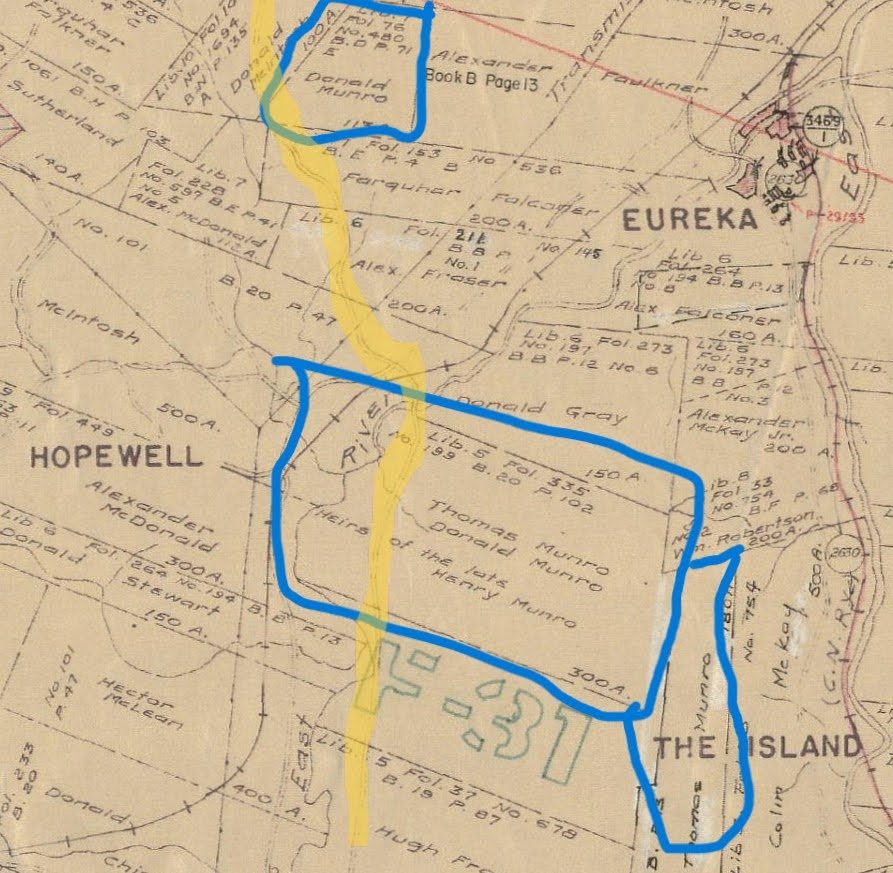
Map Notes:
The note from the researcher accompanying this map explained that the yellow line is Foxbrook Road, a still existing road in the area. In blue are lands located near Hopewell and Eureka with several Munro names assigned to them as the owner.
The property toward the top is noted as belonging to Donald Munro, to the south are two adjoining sections, a smaller one belonging to Thomas Munro and the larger property shared between Thomas Munro and Donald Munro, below this is an additional note, “Heirs of the late Henry Munro.”
Hiram, the 5th son of Hector Munro(e), was the grandson of (a) Donald on these maps. It is most likely the location of Hector’s household, and the home Hiram grew up in, is in the topmost section of this map (which we will explore later). Since the large plot is shared, and the smaller plots are individual, it seems likely the larger land represents land to be split among them and/or other possible heirs later on. Perhaps the map survey was conducted close to Henry’s passing and inheritance was not fully settled.
As you will have noticed by now, there is some inconsistency of the spelling of the surname Munro(e) now in the records. This is fairly common. The current spelling for my family only settled with Hiram or Hector's generations, although it is spelled wrong even then on some documents, it seems to vary quite a bit in the Canadian record, depending on the record-keeper. Either way, my great-great grandfather Hiram’s family had lived in the Pictou region for several generations.
Hiram’s father, Hector, only appears a few times in records. I have not found a birth certificate or record of his birth, but he first appears in the 1871 census of Canada at 38 years old with his wife Elizabeth, 36. They show up in the 1881, 1891, and he may possibly in the 1901 census as well (assuming Elizabeth predeceased him), but definitely do not appear in 1911. Though I have not been able to verify Elizabeth’s death information, I have found a death record of a Hector Munro from September 1910 in Eureka, next to Hopewell, and is noted as a widower.
Among the documents from the McCullough House genealogy center were several documents pertaining to Donald’s portion of Henry’s land. One of these documents an 1856 sale of 80 acres of land near Hopewell, with description of adjoining plots that seems to reaffirm the speculation of which land Hector’s farm was located on, mentioning adjoining land “once belonging to Farquhar Falconer” which matches our map. This sale, from Donald Munro to Hector Munro notes that Hector’s land abuts Donald’s farm, this likely means Donald subdivided the northern portion with his son.
Affirming this in yet another deed from the McCullough House, this one from 1813, “Donald Munro of the East Branch of East River, Pictou County” sells half of three hundred acres granted by Henry Munro, to his brother Thomas Munro, the owner of the other half. I believe this to be the central, shared portion of the land on the map.
The Trail Continues…
How the Munros of Hopewell came into their land,I have not yet been able to establish. A list of early settlers that were granted land in what would become Hopewell in 1797, many of whose names still existed on the slightly later map above, but did not contain a single Munro. So sometime between 1797 and 1813, Henry Munro and his sons, Thomas Munro and Donald Munro, had acquired over 400 acres of land in the Eureka/Hopewell area of Pictou County, and Henry Munro seems to have passed away before 1813 when Donald sells his half of Henry's 300 acres of land to his brother.
As I continue to look through history and perhaps across the waves of the north Atlantic to explore this lineage, I find myself looking closer at the land my ancestors settled at the turn of the 19th century. The 400 or so acres Henry, Thomas, and Donald acquired in the Eureka and Hopewell areas of Pictou County were not empty wilderness, though it may have appeared so to their eyes. They were and remain the ancestral and unceded territory of the Mi’kmaq People. This land is covered by the historic Treaties of Peace and Friendship. These agreements never ceded land; instead, they established a framework for respectful coexistence. As I search for the truth of my own family's past, I offer my deepest respect to the Mi’kmaq elders past, present, and emerging. The lands today known as Nova Scotia were their home long before my family arrived, and remains so.
It is important to me that this story honors my family’s deep resilience without erasing the history of those who stewarded this land for generations before them. While the Munros built a new life here, their settlement likely directly contributed to the displacement of the original inhabitants. I am deeply grateful for the historical accounts of the Mi’kmaq people who showed vital kindness to the very first Highland settlers arriving on the ship Hector. Some of my ancestors, Munro or otherwise, may well have owed their survival to that Indigenous generosity during their first brutal winters in Nova Scotia.
I suspect but cannot yet confirm that Henry, and possibly his sons Thomas and Donald, may be the family connection to Scotland. Certainly during this time period they could have served in the British military during the American war for independence- many highland soldiers settled this region of Pictou county. Many families during this period left Scotland for Nova Scotia due to raising rents and sometimes evictions from ancestral lands with relocation to poor coastal lands in Scotland, and those who could afford passage to Canada would be able to establish themselves on farmland they would own instead of rent.
The records have carried me from Massachusetts to Nova Scotia, and now maybe toward Scotland itself. Whether Henry Munro or his sons were born in the Highlands, arrived directly due to the Clearances, or came from somewhere else entirely remains uncertain; however for the first time, this trail no longer ends with Hiram.